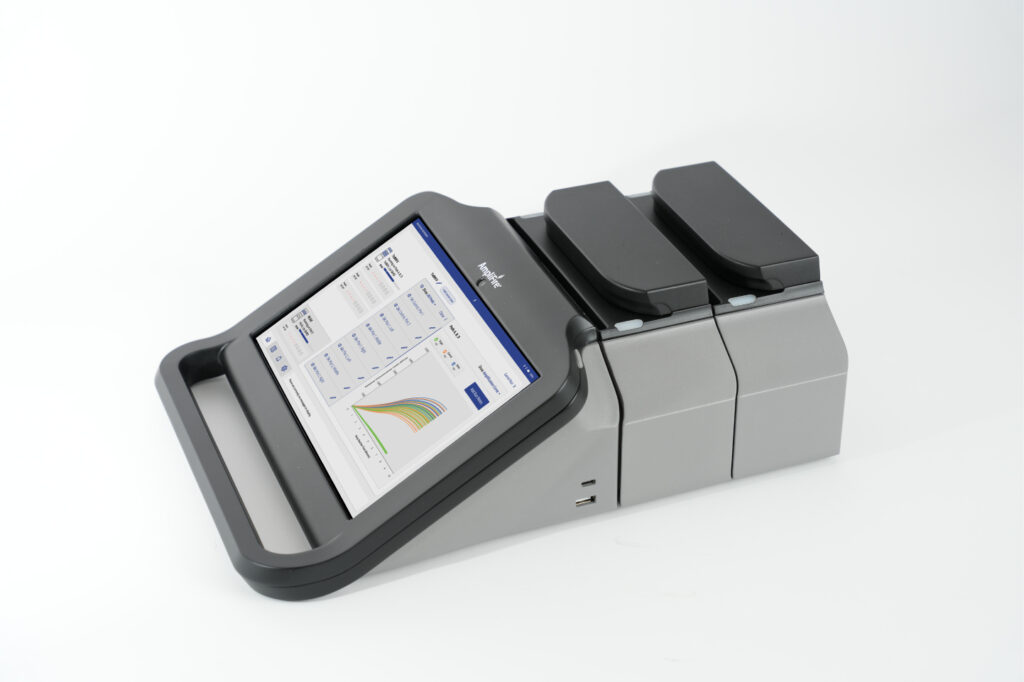

Recombinase Polymerase Amplification (RPA) kits enable fast, portable detection of the pathogens causing Citrus Black Spot (P. citricarpa) and Huanglongbing (Candidatus Liberibacter spp.). Unlike PCR, RPA amplifies DNA at a constant low temperature (25–42°C), allowing analysis without bulky laboratory equipment. The method uses carefully designed primers and a fluorescent probe that emits a measurable signal when the target pathogen is present. Small amounts of crude extracts from leaves, stems, or fruit can be tested directly in the field using a compact, battery-powered fluorescence reader, making the workflow well suited for rapid border inspections.
In EmergeNOW, two specialized RPA kits are being developed to deliver high sensitivity and specificity even in samples with very low pathogen concentration. Optimized reagent lyophilization ensures room-temperature stability for transport and storage, while simplified protocols make them accessible to non-specialist users. Validation activities in accredited laboratories and biosecure testing facilities will confirm performance against international standards. Once optimized, these kits will support on-site surveillance in orchards and at EU import control points, enabling inspectors to identify infected citrus rapidly and take immediate action to protect plant health.