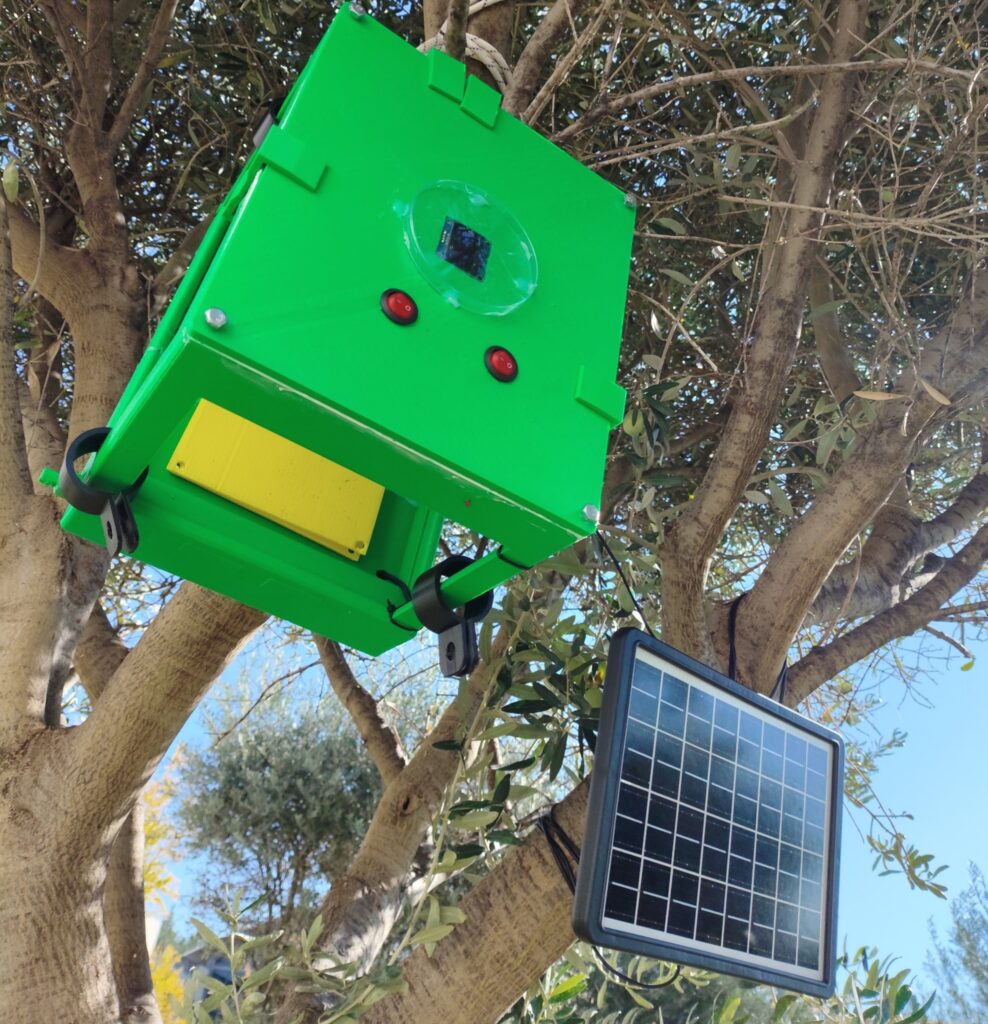

The AI-powered robotic traps automatically attract and detect key citrus disease vectors such as Diaphorina citri, Trioza erytreae and Citriculus citrisuga. The system uses a camera and embedded deep-learning models to identify and count trapped insects in real time, while onboard sensors record environmental conditions that influence pest activity. Solar-powered operation and autonomous data handling make the traps suitable for continuous monitoring in citrus orchards and around logistics areas, providing valuable insights into vector presence before visual symptoms appear on fruit or trees.
Captured data is wirelessly transmitted to a secure cloud environment, enabling early alerts to inspectors and supporting rapid intervention when vector populations increase. The traps are designed with optimized color and structure to selectively attract target pests while minimizing interference from non-target species. By combining automated insect recognition, continuous operation and remote warning capabilities, the robotic traps improve surveillance efficiency and strengthen the early detection of HLB-associated vectors in field and border settings.